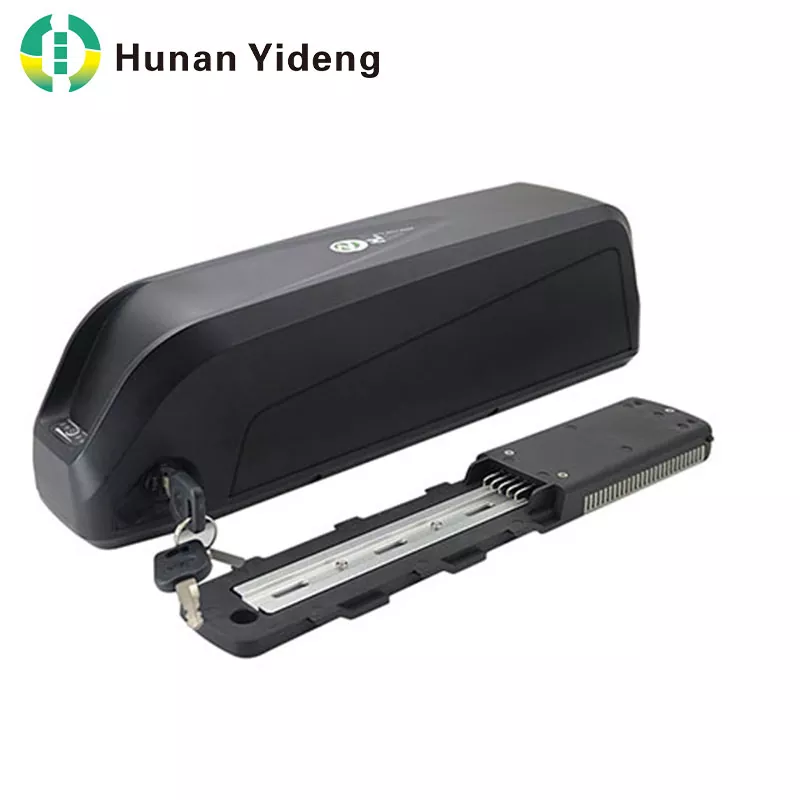
For electric bicycle manufacturers, distributors, and fleet operators, choosing a dependable battery means balancing capacity, riding range, safety, installation convenience, and weather resistance. The 21700 Waterproof E-bike Battery for Hailong G80 Electric Bicycle from Yideng is designed around these practical requirements, offering a detachable Hailong-style housing, flexible 36V/48V/52V configurations, 18650 or 21700 cylindrical cells, and an integrated BMS for reliable electric mobility applications.
The development of modern e-bikes has increased demand for battery packs that combine compact installation with dependable energy delivery. A Hailong-style battery is particularly practical because its detachable structure makes charging, replacement, inspection, and maintenance more convenient.
Yideng's battery solution is designed for mountain e-bikes, commuting bicycles, fat tire bikes, electric scooters, and other light electric mobility applications. Depending on the required system architecture, available configurations include 36V, 48V, and 52V solutions with different capacities and cell arrangements. The waterproof housing provides additional protection for outdoor use, while the built-in battery management system helps protect against over-charge, over-discharge, over-current, short circuit, and abnormal temperature conditions.
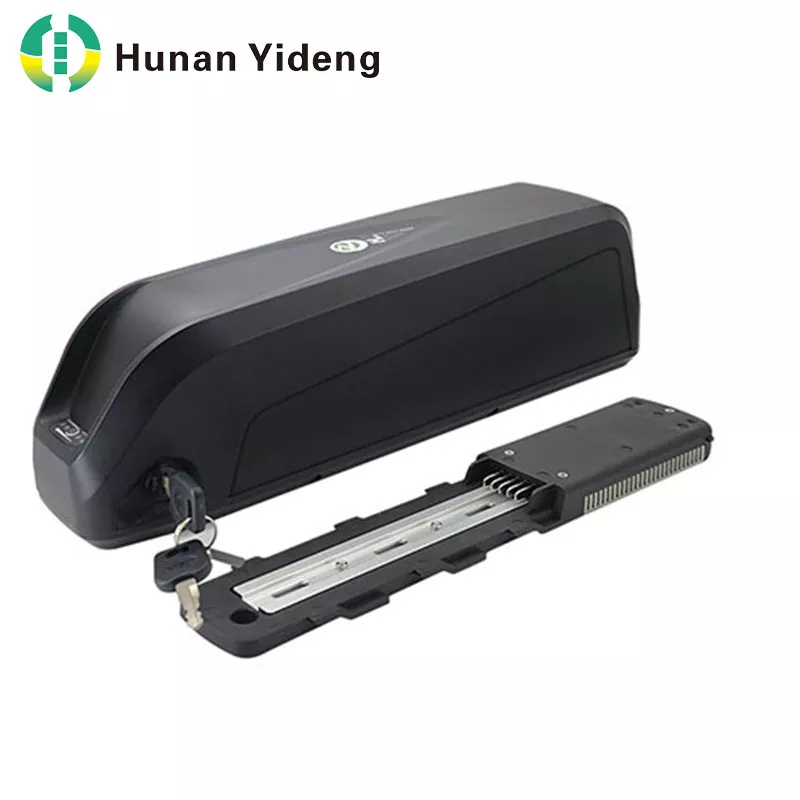
Table of Contents
- Why Choose a Hailong-Style E-bike Battery?
- What Makes 21700 Cells Valuable for E-bike Batteries?
- Key Battery Configurations and Parameters
- How Does Waterproof Construction Benefit E-bike Use?
- How Does the BMS Improve Battery Safety?
- Where Can This Battery Be Used?
- Why Is OEM Customization Important?
- How Should Buyers Select the Right Configuration?
- Frequently Asked Questions
- Conclusion
Why Choose a Hailong-Style E-bike Battery?
Battery installation is an important consideration when developing or upgrading an electric bicycle. The Hailong-style format has become popular because the battery can be mounted on the bicycle frame while remaining relatively easy to remove.
The Hailong G80-oriented design combines a detachable housing with an integrated locking structure. This allows riders or technicians to remove the battery for charging and maintenance without requiring complicated disassembly.
For commercial buyers, the housing format also simplifies product integration. Manufacturers can evaluate battery dimensions, connector arrangements, voltage, capacity, and motor compatibility before selecting the final configuration.
Key advantages include:
- Detachable design for convenient charging and maintenance.
- Hailong-style housing for practical frame installation.
- Integrated locking structure for improved battery retention.
- Multiple voltage and capacity configurations.
- Compatibility with a range of light electric mobility applications.
What Makes 21700 Cells Valuable for E-bike Batteries?
The 21700 cylindrical cell format provides a larger physical volume than the widely used 18650 format. This gives battery designers additional flexibility when balancing capacity, pack dimensions, discharge characteristics, and available installation space.
For an e-bike battery, the objective is not simply to maximize capacity. Engineers must consider the relationship between battery voltage, amp-hour capacity, motor power, cell configuration, enclosure dimensions, and expected riding conditions.
Yideng can configure this Hailong-style battery using optimized 18650 or 21700 cylindrical cells. This approach is useful when different bicycle platforms require different combinations of energy density and physical dimensions.
For example, a manufacturer developing a long-range fat tire e-bike may prioritize higher capacity, while a compact commuter bicycle may place greater emphasis on enclosure size and overall weight. A configurable cell architecture allows the battery to be adapted to these different requirements.
What Are the Key Battery Configurations and Parameters?
One of the most important purchasing considerations is matching battery specifications with the electrical architecture of the e-bike. The following configurations illustrate the available options:
| Configuration | Cell Arrangement | Cell Type | Recommended Motor Power | Approx. Dimensions |
|---|---|---|---|---|
| 48V 20Ah | 13S4P | 21700-5Ah | Below 1000W | 368 × 127 × 90 mm |
| 48V 21Ah | 13S6P | 18650-3.5Ah | Below 1000W | 368 × 127 × 90 mm |
| 48V 17.5Ah | 13S5P | 18650-3.5Ah | Below 1000W | 368 × 109 × 90 mm |
| 48V 20Ah | 13S4P | 21700-5Ah | Below 1000W | 368 × 109 × 90 mm |
| 36V 21Ah | 10S6P | 18650-3.5Ah | Below 1000W | 362 × 92 × 90 mm |
| 48V 14Ah | 13S4P | 18650-3.5Ah | Below 1000W | 362 × 92 × 90 mm |
| 52V 14Ah | 14S4P | 18650-3.5Ah | Below 1000W | 362 × 92 × 90 mm |
These specifications should be treated as configuration references rather than universal compatibility claims. Buyers should confirm motor voltage, controller requirements, connector type, mounting dimensions, charging specifications, and discharge requirements before placing an order.
How Does Waterproof Construction Benefit E-bike Use?
E-bikes are frequently exposed to changing outdoor conditions. Rain, road splash, humidity, dust, and accidental water exposure can create additional challenges for battery enclosures and electrical connections.
The waterproof housing used for this battery is intended to provide improved protection for internal battery components during normal outdoor electric mobility applications. This is particularly valuable for commuting bikes, mountain e-bikes, and fat tire bicycles that may operate in unpredictable environments.
However, waterproof should not automatically be interpreted as unlimited water resistance. The appropriate protection level depends on the specific application and design requirements. Buyers who need a defined IP rating or special environmental protection should confirm the required specification during the OEM development stage.
Good installation practices are equally important. Battery covers, connectors, wiring interfaces, and mounting points should be inspected regularly to ensure that the protection system remains effective during long-term operation.
How Does the BMS Improve Battery Safety?
A battery management system is a critical part of a modern lithium battery pack. It monitors operating conditions and helps prevent the battery from being exposed to potentially damaging electrical or thermal conditions.
The integrated BMS for this e-bike battery can provide protection functions such as:
- Over-charge protection: Helps prevent charging beyond the designed operating limit.
- Over-discharge protection: Helps prevent excessive discharge that can negatively affect battery performance.
- Over-current protection: Helps protect the pack when current demand exceeds the designed range.
- Short-circuit protection: Provides an additional protective layer against abnormal electrical conditions.
- Temperature protection: Helps monitor temperature-related operating conditions.
During acceleration, climbing, and extended riding, proper battery management can contribute to more stable operation. For commercial e-bike manufacturers, BMS configuration should be evaluated together with the motor controller and charging system to ensure system-level compatibility.
Where Can This Battery Be Used?
The flexible configuration of the Hailong-style battery makes it suitable for multiple light electric mobility platforms.
- Commuter e-bikes: Suitable for daily transportation and urban mobility applications.
- Mountain e-bikes: Designed for applications requiring consistent electrical output during climbing and variable terrain.
- Fat tire electric bicycles: Suitable for larger bicycle platforms where higher battery capacity may be beneficial.
- Electric scooters: Selected configurations can support compatible scooter platforms.
- Light electric motorcycles: Customized versions may be evaluated for appropriate low-power mobility systems.
- Outdoor equipment: Customized battery architectures can also support selected portable power applications.
For manufacturers, the ability to select voltage, capacity, cell arrangement, connector, and enclosure configuration can reduce the need to redesign the entire electrical system for different vehicle models.
Why Is OEM Customization Important?
There is no single battery configuration that is ideal for every electric bicycle. Frame geometry, controller specifications, motor power, expected range, charging method, available battery compartment, and target market can all influence battery design.
Yideng supports OEM customization for different e-bike projects. Depending on the application, customization can cover:
- Battery voltage, including 36V, 48V, and 52V solutions.
- Capacity and cell configuration.
- 18650 or 21700 cylindrical cell selection.
- Connector and wiring configuration.
- Communication interface requirements.
- Battery housing and packaging design.
- Prototype samples before larger-volume production.
This makes the battery suitable not only for replacement applications but also for e-bike brands and distributors developing new models. Working with a professional lithium-ion battery cell and pack manufacturer can also help buyers evaluate pack-level requirements rather than focusing only on nominal voltage and capacity.
How Should Buyers Select the Right Configuration?
Choosing a battery should begin with the complete electrical system rather than capacity alone. Before purchasing, manufacturers and distributors should review the following factors:
- Motor voltage: Confirm whether the bicycle uses a 36V, 48V, or 52V system.
- Controller compatibility: Ensure the battery's voltage and current capabilities are suitable for the controller.
- Capacity: Select Ah capacity according to the desired riding range and available frame space.
- Cell configuration: Determine whether 18650 or 21700 cells provide the better balance for the application.
- Physical dimensions: Measure the battery compartment and mounting area carefully.
- Connector: Confirm connector type, polarity, wiring, and communication requirements.
- Environmental conditions: Consider exposure to rain, dust, vibration, temperature changes, and outdoor use.
- Compliance: For international distribution, verify the certifications and transport documentation required for the target market.
A professional supplier should be able to review these requirements before production. This is particularly important for OEM orders where a small dimensional or electrical mismatch can affect the entire bicycle system.
Frequently Asked Questions
Q1: What voltage options are available for the Hailong G80 e-bike battery?
Yideng provides 36V, 48V, and 52V solutions according to motor systems and project requirements. The correct voltage should be selected according to the complete e-bike electrical architecture.
Q2: Can the battery capacity and connector be customized?
Yes. OEM customization can include capacity configuration, cell selection, connector type, wiring design, communication interface, and battery structure.
Q3: Is the Hailong G80 battery waterproof?
The battery uses a waterproof housing designed for outdoor electric mobility applications. If a specific waterproof or IP protection rating is required, buyers should confirm the target specification with Yideng during product development.
Q4: What cells can be used in this e-bike battery?
The battery can be configured with selected 18650 and 21700 cylindrical lithium cells. The appropriate cell arrangement depends on the desired voltage, capacity, dimensions, discharge performance, and application conditions.
Q5: Can buyers order samples before bulk production?
Sample orders can be arranged for testing and validation. MOQ requirements may vary according to the selected battery specification and customization requirements.
Q6: Are compliance documents available for international sales?
Yideng can provide relevant certification and compliance documentation according to product requirements, including documents associated with UN38.3, CE, RoHS, and IEC 62133 where applicable.
Conclusion
The 21700 Waterproof E-bike Battery for Hailong G80 Electric Bicycle combines a detachable Hailong-style housing, flexible 36V/48V/52V configurations, 18650 and 21700 cell options, and integrated BMS protection to address the practical requirements of modern electric mobility. Its customizable architecture makes it a useful solution for commuter e-bikes, mountain bikes, fat tire bicycles, and other compatible applications.
For e-bike manufacturers, wholesalers, distributors, and project developers, the right battery should be evaluated as part of the complete vehicle system. If you are looking for a reliable China battery manufacturer for customized Hailong-style e-bike battery solutions, contact us to discuss your required voltage, capacity, dimensions, cell configuration, connector, and OEM requirements.