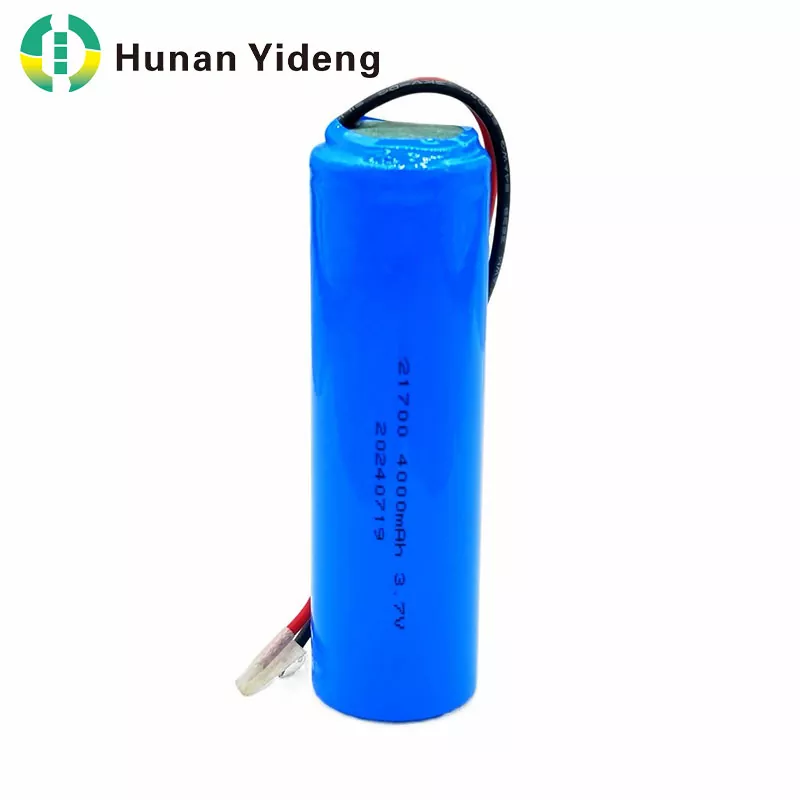
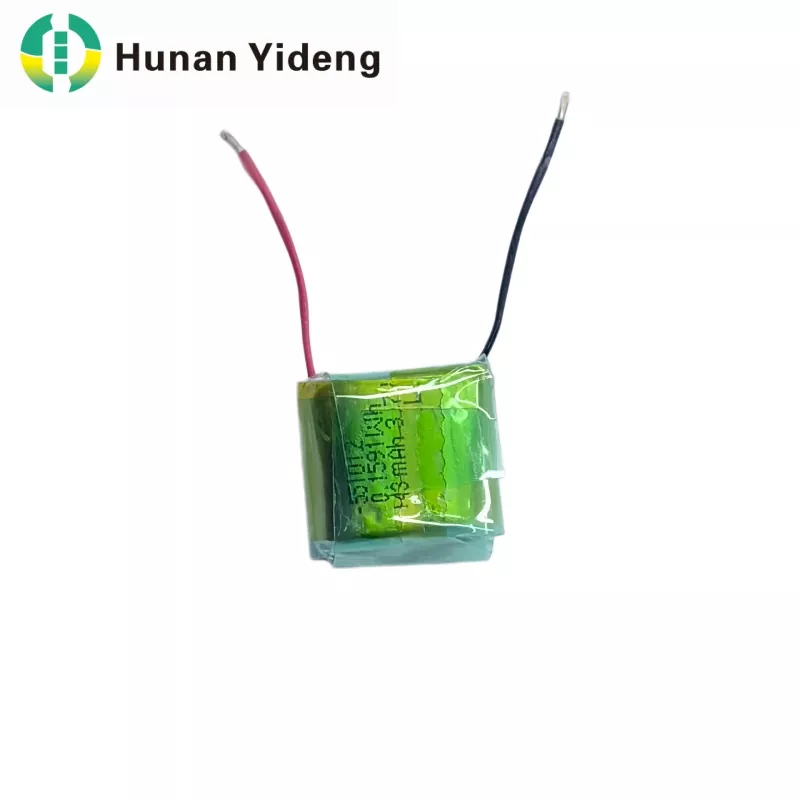
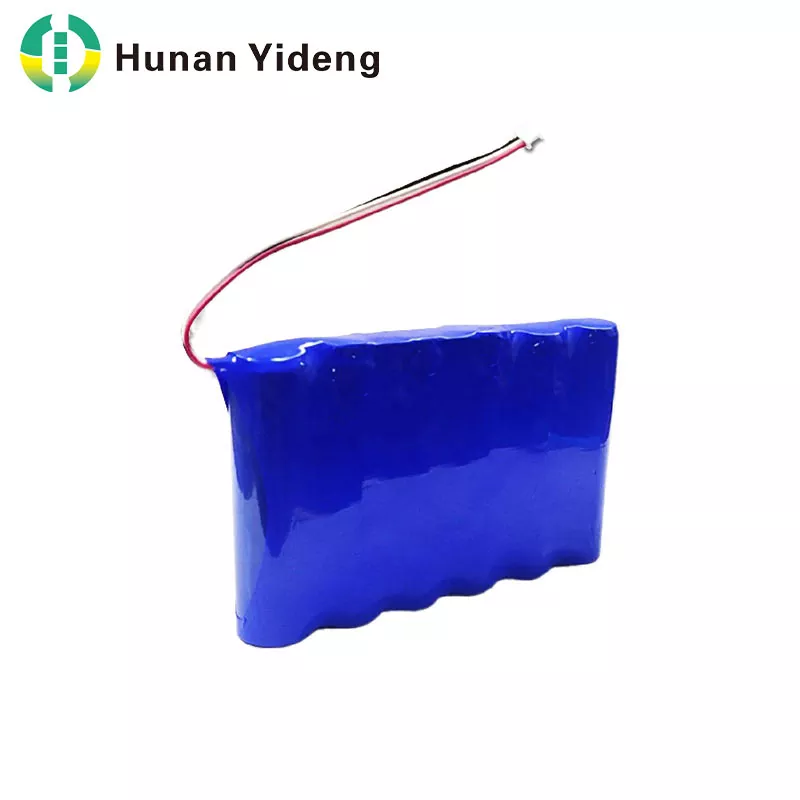
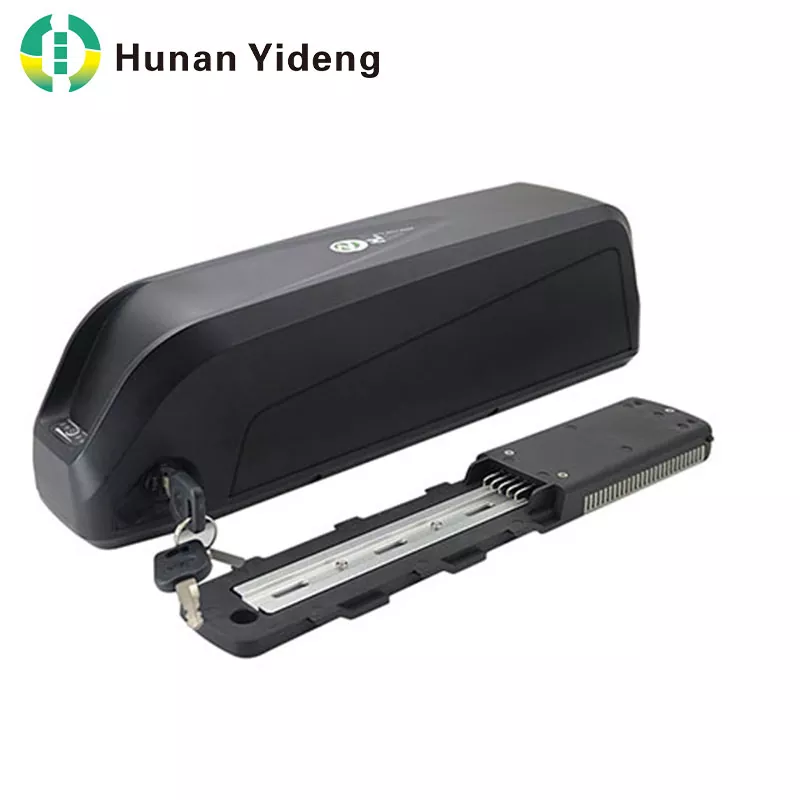
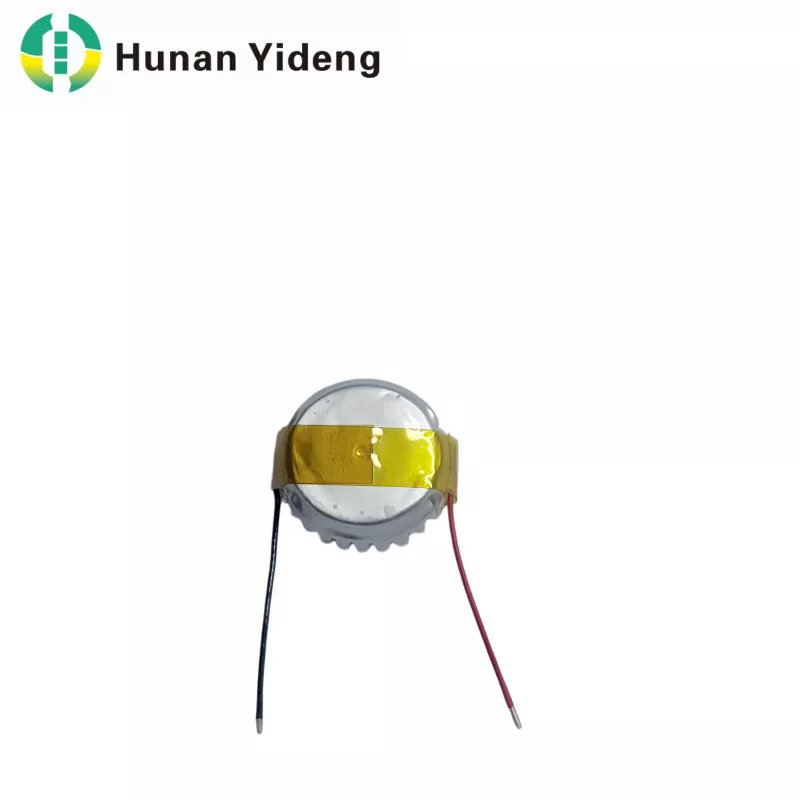
Yideng provides the 21700 3.7V 4000mAh Rechargeable Liquid Battery Long Cycel for manufacturers and product developers seeking dependable energy storage, stable discharge performance, and extended service life. With its cylindrical format, rechargeable design, and 4000mAh rated capacity, this battery is a practical option for portable power equipment, power tools, electric mobility devices, and customized battery pack applications.
A reliable rechargeable battery must balance capacity, physical dimensions, electrical performance, service life, and application compatibility. The 21700 3.7V 4000mAh rechargeable lithium battery combines a nominal voltage of 3.7V with a rated capacity of 4000mAh, providing approximately 14.8Wh of nominal energy per cell. Its cylindrical design supports integration into compact, modular battery assemblies for equipment that requires consistent power delivery. This guide explains its specifications, working principles, potential applications, cycle-life considerations, and purchasing factors to help engineers, procurement professionals, and equipment manufacturers make informed decisions.
A 21700 battery is a cylindrical rechargeable cell format commonly used in applications that require a practical balance between energy capacity and installation space. The designation generally refers to a cell approximately 21 mm in diameter and 70 mm in length, although the precise dimensions depend on the manufacturer's design and tolerances.
The 3.7V rating represents the nominal operating voltage, while 4000mAh indicates the rated electrical capacity under specified test conditions. Together, these characteristics provide a useful starting point for estimating energy requirements and planning battery configurations.
The product listed by Yideng is intended for applications requiring rechargeable power, stable output, and flexible integration. It can be considered for individual-cell use or as a building block for a larger battery assembly, provided the final configuration matches the equipment's electrical and safety requirements.
It is important to distinguish a cell from a complete battery pack. A standalone cell does not automatically include the enclosure, wiring, battery management system (BMS), connectors, or protective features required by a finished product. These elements must be evaluated separately when designing a complete power solution.
Before selecting a rechargeable battery, buyers should understand what each specification means and how it affects the intended application. The following table summarizes the basic parameters identified by the product name and the general characteristics of the 21700 format.
| Parameter | Specification | Practical Significance |
|---|---|---|
| Battery format | 21700 cylindrical cell | Helps determine mounting space and pack layout |
| Nominal voltage | 3.7V | Supports electrical system and series-connection planning |
| Rated capacity | 4000mAh (4Ah) | Provides a reference for estimating operating time |
| Nominal energy | Approximately 14.8Wh | Calculated from nominal voltage multiplied by rated capacity |
| Rechargeability | Rechargeable | Supports repeated charging and discharging within specified limits |
| Cell configuration | Individual cell or engineered battery assembly | Allows system designers to plan voltage and capacity requirements |
| Cycle life | Confirm the manufacturer's rated value | Depends on test conditions, operating limits, and cell design |
| Charging voltage and current | Follow the approved product datasheet | Prevents incompatible charging conditions |
Note: The table distinguishes information indicated by the product name from specifications that require confirmation. The exact charging limits, discharge current, dimensions, operating temperature, and cycle-life rating should be verified against Yideng's current technical datasheet before procurement or product integration.
The nominal energy calculation is straightforward:
Energy = Nominal voltage × Rated capacity
For this cell, 3.7V × 4Ah = 14.8Wh. Actual usable energy depends on discharge current, cutoff voltage, temperature, cell condition, and the power system's efficiency.
Cycle life describes how many charge-and-discharge cycles a battery can complete before its capacity declines to a specified threshold under defined testing conditions. It is not the same as calendar life, which measures how long a battery remains usable over time.
For a 21700 rechargeable lithium battery, long-term performance depends on several interacting factors.
Using the correct charger is essential. Excessive charging voltage, unsuitable charging current, or charging outside the approved temperature range can accelerate cell degradation. A compatible charging profile helps maintain predictable performance throughout repeated use.
Depth of discharge (DoD) describes the proportion of available capacity used during a discharge cycle. Repeatedly using nearly the entire available capacity may affect cycle life differently from operating within a narrower state-of-charge range. The relationship depends on the cell design and the manufacturer's test data.
High temperatures can accelerate chemical aging, while charging lithium-ion cells below their permitted temperature range can create additional risks. Equipment designers should evaluate the battery's actual thermal environment, including heat generated by motors, chargers, nearby components, and high-current operation.
Heavy loads can increase internal heating and voltage drop. A battery intended for moderate current should not automatically be assumed suitable for a high-power application. Continuous and pulse discharge ratings must be checked separately.
Long storage periods at unsuitable temperatures or charge levels can reduce battery performance. For multi-cell assemblies, consistent cell characteristics and appropriate protection help prevent individual cells from operating beyond their limits.
The 21700 3.7V 4000mAh rechargeable battery offers several potential advantages for equipment manufacturers and system integrators.
A 4Ah rated capacity provides a useful foundation for calculating energy requirements in portable equipment. For applications with predictable power consumption, engineers can estimate operating time before accounting for conversion losses, peak loads, and usable-capacity limitations.
The standardized cylindrical format simplifies mechanical planning and allows designers to arrange cells into structured battery assemblies. However, actual compatibility depends on cell dimensions, terminals, insulation, holders, and the available enclosure space.
Multiple cells can be configured in series, parallel, or a combination of both when supported by the cell specifications and the system design. Series connections increase voltage, while parallel connections increase available capacity and current capability within the limits of the completed assembly.
For example, a theoretical 3S1P configuration using three 3.7V, 4000mAh cells provides 11.1V nominal voltage and 4000mAh nominal capacity. Its nominal energy is approximately 44.4Wh. The completed pack still requires suitable cell matching, protection, wiring, and charging controls.
Rechargeable cells can reduce the need for frequent disposable-battery replacement. The economic benefit depends on purchase cost, achievable cycle life, charging efficiency, maintenance requirements, and the operating profile of the finished equipment.
The 21700 form factor and 4000mAh capacity make this battery worth evaluating for a range of portable and modular power applications. Final suitability depends on the cell's verified current rating, chemistry, protection requirements, and environmental limits.
For applications involving high current, vibration, moisture, or wide temperature variation, buyers should request application-specific technical validation rather than relying on capacity and nominal voltage alone.
Manufacturers can also review Yideng's lithium-ion battery cell and pack solutions to explore the differences between individual cells and integrated battery systems.
Choosing a battery involves more than matching a product title to a required capacity. A structured evaluation can reduce compatibility problems, improve operating reliability, and help procurement teams compare suppliers objectively.
Identify the equipment's nominal voltage, minimum operating voltage, maximum current, and expected runtime. Estimate energy consumption under realistic operating conditions rather than relying exclusively on ideal laboratory calculations.
Request the rated continuous discharge current and pulse discharge limits. If the equipment contains a motor, heating element, or other demanding load, examine startup current and transient power requirements.
Confirm the cell's diameter, length, terminal arrangement, insulation requirements, and permitted dimensional tolerances. These details matter when designing holders, welding fixtures, enclosures, and production assemblies.
Ask the supplier how cycle life is measured, including charge and discharge currents, cutoff voltages, ambient temperature, depth of discharge, and the remaining-capacity threshold. Comparing results under equivalent conditions produces more meaningful purchasing decisions.
Before placing a bulk order, request the current datasheet, inspection criteria, batch traceability information, applicable transport documentation, and relevant safety test reports. Confirm which documents apply to the exact cell model rather than assuming that certificates for another product cover the selected battery.
A useful procurement checklist includes:
Rechargeable lithium batteries require appropriate electrical and mechanical protection. A cell's nominal voltage does not define its full operating range, so designers should use the approved product datasheet to establish charging, discharging, and storage limits.
For multi-cell packs, professional design and validation are particularly important. Cell matching, connection quality, thermal management, and protection-system settings all influence the safety and service life of the finished assembly.
The designation refers to a cylindrical battery format generally measuring approximately 21 mm in diameter and 70 mm in length. The exact dimensions should be confirmed using the selected manufacturer's mechanical drawing.
Its nominal energy is approximately 14.8Wh, calculated by multiplying 3.7V by 4Ah. The usable energy delivered to a device depends on discharge conditions, conversion efficiency, temperature, and the system's cutoff voltage.
Runtime depends on the device's power consumption and the amount of capacity available under actual operating conditions. As a simplified example, dividing 4Ah by a constant 1A load gives approximately four hours of theoretical operation. Real runtime may be shorter because of discharge characteristics, voltage conversion losses, temperature, and cutoff settings.
Cycle life is influenced by charging voltage and current, discharge depth, operating temperature, load conditions, storage practices, and the manufacturer's cell design. Buyers should obtain the product-specific cycle-life rating and its test conditions before making service-life commitments.
Yes, suitable cells can be arranged in series to increase nominal voltage or in parallel to increase capacity. The configuration must be engineered with compatible cells, appropriate electrical connections, protection circuitry, and a matching charging system.
Buyers should request the current technical datasheet, dimensional specifications, charging and discharge limits, cycle-life test results, quality inspection details, and applicable safety and transportation documents. Sample testing under the intended operating conditions is also recommended before large-scale deployment.
The 21700 3.7V 4000mAh rechargeable lithium battery offers a practical combination of nominal voltage, 4Ah capacity, and cylindrical construction for portable equipment, power tools, electric mobility systems, and customized battery assemblies. Its potential long-term value depends on more than rated capacity: charging compatibility, discharge requirements, temperature control, protection design, and verified cycle-life performance must all be considered. By evaluating these factors against a product's real operating conditions, engineering and procurement teams can select a battery solution that better supports reliability, service life, and overall system performance.
Looking for a dependable rechargeable battery solution for your next project? Yideng can help you evaluate battery options for your application and discuss technical requirements, product specifications, and potential customization. Visit the 21700 3.7V 4000mAh rechargeable battery product page to review the available information, or contact us to discuss your requirements and request a quotation for your project.